
Showing posts with label Social Media. Show all posts
Showing posts with label Social Media. Show all posts
Wednesday, 25 May 2016
Twitter Pulls Back from On-Platform Buying – Do Consumers Want to Buy on Social?

Tsai Ing-wen 'extremist because single' article riles social media
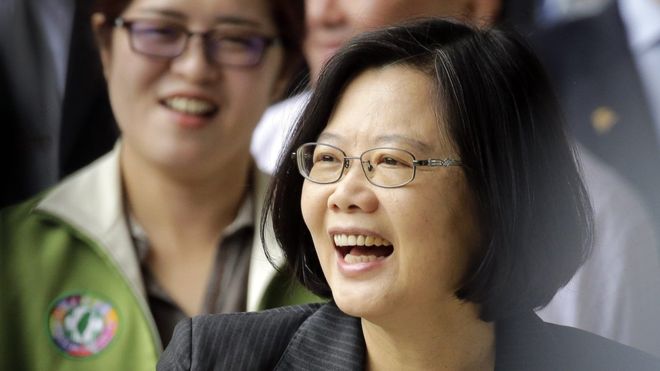
The opinion piece, published by the Xinhua news agency, said Ms Tsai did not have the "emotional burden" of a family, leading to an "erratic style".
Friday, 20 May 2016
China 'flooding' social media with fake posts

The research by Harvard academics draws on leaked documents to paint a picture of the way China polices social media.
Iraq Blocks Internet to Stop Widespread Exam Cheating

Since Saturday, authorities have shut down all online access from 5 a.m. to 8 a.m. daily, according to Education Ministry spokeswoman Hadeel al-Ameri.
New Website Helps Germans and Migrants Meet, Talk About Life
During the height of the migrant crisis in Europe last fall, Lasse Landt came to a startling realization.
Thousands of migrants were pouring into Germany every day, but the 36-year-old startup consultant from Berlin hadn't met a single one of them.
Thousands of migrants were pouring into Germany every day, but the 36-year-old startup consultant from Berlin hadn't met a single one of them.
Saturday, 14 May 2016
Facebook Publishes Its Policy On 'Trending Topics'

Want a Federal Security Clearance? Your Facebook May Be Reviewed
If you ever want access to government secrets, maybe think twice before you tweet.
Director of National Intelligence James Clapper signed a directive on Thursday allowing the inspection of social media profiles when reviewing applicants for federal background checks. While looking at someone's Instagram, Facebook or other profiles won't be required, it will now be a tool available when reviewing individuals for security clearances.
Director of National Intelligence James Clapper signed a directive on Thursday allowing the inspection of social media profiles when reviewing applicants for federal background checks. While looking at someone's Instagram, Facebook or other profiles won't be required, it will now be a tool available when reviewing individuals for security clearances.
Wednesday, 11 May 2016
The new Instagram logo gets panned by social media

The new logo bears the camera outline of the previous iteration but has replaced the colour scheme with a purple and yellow gradient design.
Uganda in social media blackout

Facebook isn’t burying conservative news, says social media exec

Sunday, 1 May 2016
Radiohead Deletes All Social Media, Website Goes Blank

On Sunday (May 1), with no explanation, all of the postings on the U.K. band’s Twitter and Facebook accounts had been deleted, and its website had gone completely white. Postings on frontman Thom Yorke’s Twitter account had disappeared as well.
How Donald Trump Became the Dictator of Social Media

This is usually taken to mean that Trump, like some political McLuhan, is a mastermind who understands social media the way his forebears understood their media. But I suspect that with him, it may be less a matter of his brilliance or even his intuition than of the accidental match of personality with medium. He is a man of his technological moment.
The standard take on that mutuality is that social media prioritize constant churn, and Trump is a non-stop, one-man political tornado, roaring through this campaign and sucking up every news cycle in his vortex. That certainly describes what Trump has done, but it isn’t exclusive to social media. In fact, he seems to have grabbed more attention on traditional news sites, especially cable TV, than on social media.
Trump is the decontextualizer-in-chief.
Where Trump and social media do conjoin, promoting his candidacy and changing our whole political environment, isn’t in the generation of noise. It is in something even more fundamental to each: Trump is the “decontexualizer-in-chief” operating in a medium that likewise is about cutting the world into bits that don’t necessarily accrete into anything sensical.
Books have been written about the impact of social media on our electoral process, and decontextualization usually isn’t high on the list of transformations, in part because fragmentation isn’t usually high on the list of properties that inhere to social media. Those properties, as I see them, are instantaneity, anonymity, democratization, authenticity and yes, fragmentation, and they lead, in their various ways, to a variety of consequences.
Studies have shown, not surprisingly, that social media contribute to increased polarization of our politics, since social media allow like-minded people to find one another who might otherwise be atomized—sometimes to public advantage, and sometimes not.
You might think of social media as a mechanism of social aggregation that can lead to positive social activism. Then again you might think of it as a virtual Munich beer hall. In any case, I don’t think there is any doubt that social media have begun to edge out more traditional forms of collective action—for example, party apparatuses. And I also don’t think there is any doubt that Trump benefited from this erosion, the darling of social media vanquishing Jeb Bush, the darling of the GOP establishment, or Marco Rubio, the darling of the MSM.
Thanks in part to the anonymity in which folks can use social media, those media have also been accused of coarsening our politics, evicting the politesse, and Trump has clearly benefited from that, too. It is much easier to bloviate, as Trump’s supporters do, in the blogosphere where you can’t be found than on the page or the TV screen where you can. There are no trolls in the MSM because there are no bridges for them to hide under. (OK, I take that back. There is Fox News.) We all know that social media can facilitate bullies and fortify the weak and cowardly, which can be mistaken for the authenticity of speaking your mind. Again, enter Donald Trump.
When you think of democratization on social media, you think of that collective action I referenced above. But social media—in fact, the Internet generally—have also recalibrated our focus by democratizing information; not the access to it, but the lack of discrimination among bits of information. The Internet is a great disinformation machine where anyone can say anything. It is also a kind of magnifying glass enlarging the most minute and trivial things—things, frankly, that very few people seemed to care about before the advent of the Internet. I don’t recall us ever having recaps of every episode of every television program, complete with critical annotation. Well, now we do.
Similarly, though live tweeting might be perceived as a form of increased immediacy, it might also be perceived as a form of disproportion. By magnifying the small and putting everything on the same valence, the trivial and the significant together, it fogs our ability to discern the big from the small. And, God knows, this has helped Trump, too. If he is the most bullying of candidates, he is also the most trivializing. His idea of a policy pronouncement is “build a wall.”
When it comes to democratization, though, perhaps more important as a practical matter is how social media can allow a candidate to circumvent the MSM and seize the narrative: the democracy of challenging the gatekeepers. This has certainly been one of Trump’s achievements as well. Every time the MSM begin one of their Trump rants—the sort of rants that in the past have forged iron narratives candidates cannot break—Trump rants right back over Twitter, leaving the MSM no choice but to cover the rant and, in the process, subvert themselves.
I said in an earlier column that in Iowa, Trump stole the narrative away from the MSM. He has been running with it ever since, and it has been this collaboration between Trump and social media that, I think, may be the second most important way he and they have transformed our political process. By the lights of the MSM, Trump should have been buried long ago under the weight of his effrontery. With the help of social media, he hasn’t been.
I say “second most” because the most important, I believe, is the way Trump, with the accommodation of social media, has used its affinity for decontextualization to decontextualize our politics. Social media are the champions of the nugget—the minute-or-less Instagram film, the 140-character tweet, the instantaneous Snapchat, the six-second (yes, six seconds!) Vine. Because nothing in social media is sustained, people may connect, but ideas rarely do. By the time you have finished slicing and dicing everything into those nuggets, you have pried them out of any larger context, any skein of meaning, any argument, any vision. In a way, social media take the Memento approach to life and apply it to everything.
Politically, this fragmentation has major ramifications. Context is reason. Context is what enables us to weigh and judge. Context removes impulse. And this is really why you cannot conduct a serious campaign on social media. Context disappears. Of course, radio lends itself to emotion and unreason and even soundbites. So obviously does television. Both can substitute the momentary for the considered.
This is one of the things the great media analyst Neil Postman decried in his book Amusing Ourselves to Death. He fretted over the way an increasingly visceral culture had given rise to an increasingly unserious culture, with the obvious political implications. Above all else, Donald Trump is the candidate of impulse running against candidates of calculation. He is the king of the one-liner, the insult, the proudly politically incorrect slur. And that is a central reason why disaffected Republicans have rallied to him. He is nothing but bites.
All of which makes Trump not just a more outrageous and blustering candidate than the ones to whom we are accustomed. It makes him an epistemologically different kind of candidate—one who challenges the very basis of our politics. He doesn’t have to make sense. He doesn’t have to provide a program or a vision. All he needs are his zingers, so long as they are no more than 140-characters. Twitter can do that to you. And now we are getting a taste of what it can do to our political discourse.
Source: http://www.alternet.org/media/how-donald-trump-became-dictator-social-media
Friday, 29 April 2016
Snapchat 'Speed Filter' Led to Georgia Car Crash, Lawsuit Alleges
 Lawyers for a man with permanent brain damage are suing a driver and Snapchat after they say the speed tracker on the social media platform caused the car crash that injured him.
Christal McGee, of Spalding County, Georgia, was driving a Mercedes Benz at about 11:15 p.m. on Sept. 10, 2015, while using a filter on Snapchat that tracks how fast users are moving, alleges the lawsuit, which was filed of behalf of victim Wentworth Maynard earlier this month.
McGee wanted to post an image of herself going fast, so she "pushed the speed of her Mercedes to above 80 miles per hour. McGee then pushed the speed of her Mercedes to above 90 miles per hour. And McGee continued to push the speed of her Mercedes to above 100 miles per hour," according to the lawsuit, filed by attorney Michael Lawson Neff.
Snapchat's speed tracker rewards users who submit photos of their speed by giving them points, the suit notes. By the time McGee collided with Maynard's Mitsubishi, she was driving approximately 107 mph on a Clayton County, Georgia, boulevard that has a speed limit of 55 mph.
"McGee was traveling so fast, there was no time to react. Maynard's car was struck so violently it shot across the left lane into the left embankment," a statement on Neff's firm's website said.
Maynard, who was just starting his shift as an Uber driver, suffered a severe traumatic brain injury. He spent five weeks in a hospital intensive care unit after the crash, lost 50 pounds, and can no longer work, much less take care of himself, Neff said.
"The issue really is about distracted teenage drivers. It's about Snapchat encouraging teenagers to drive at fast speed for social status," Neff told NBC News, adding that neither McGee, who he said is 18 now, nor Snapchat have responded to the suit.
Petitions on Change.org have called on Snapchat to eliminate the speed tracker, Neff said.
"It's a national safety issue," he said.
In a statement to NBC News, a Snapchat spokesperson said, "No Snap is more important than someone's safety. We actively discourage our community from using the speed filter while driving, including by displaying a "Do NOT Snap and Drive" warning message in the app itself."
According to Neff, McGee posted a shot of herself on Snapchat after the crash with blood dripping down her forehead with the caption, "Lucky to be alive." She could not be reached by NBC News.
Source: http://www.nbcnews.com/tech/social-media/snapchat-speed-filter-led-georgia-car-crash-lawsuit-alleges-n563616
Facebook Earnings Shatter Wall Street Expectations
Tech giant Facebook crushed analyst estimates when it reported first-quarter results on Wednesday.
The company reported adjusted first quarter earnings of 77 cents per share on revenue of about $5.38 billion. Analysts had expected Facebook to report earnings of about 62 cents per share on $5.26 billion in revenue, according to a consensus estimate from Thomson Reuters.
In fact, Facebook's earnings per share figure was 10 percent better than the highest estimate of 41 Wall Street analysts.
Shares in the company jumped about 7 percent in after-hours trading following the announcement.
Facebook also said it was proposing the creation of new class C shares. If the proposal is approved, shareholders would get two C shares for each class A or class B share they own. This would potentially allow Facebook CEO Mark Zuckerberg to sell some of his shares while still maintaining control of the company.
Source: http://www.nbcnews.com/tech/social-media/facebook-earnings-shatter-wall-street-expectations-n563746
The company reported adjusted first quarter earnings of 77 cents per share on revenue of about $5.38 billion. Analysts had expected Facebook to report earnings of about 62 cents per share on $5.26 billion in revenue, according to a consensus estimate from Thomson Reuters.
In fact, Facebook's earnings per share figure was 10 percent better than the highest estimate of 41 Wall Street analysts.
Shares in the company jumped about 7 percent in after-hours trading following the announcement.
Facebook also said it was proposing the creation of new class C shares. If the proposal is approved, shareholders would get two C shares for each class A or class B share they own. This would potentially allow Facebook CEO Mark Zuckerberg to sell some of his shares while still maintaining control of the company.
Source: http://www.nbcnews.com/tech/social-media/facebook-earnings-shatter-wall-street-expectations-n563746
Wednesday, 27 April 2016
Facebook Shares Spike On Revenue, Earnings That Beat Estimates

The Menlo Park, Calif.-based company reported revenue and earnings for the first quarter on Wednesday that easily beat analysts’ estimates, sending shares up nearly 10% in after-hours trading. Facebook results came after the company reported record revenue and net income in the fourth quarter, despite heavy spending on longer-term projects in virtual reality, artificial intelligence, expanding Internet access globally and hiring thousands of new employees.
YouTube's Quality Paradox: PewDiePie Explains It And Might Even Solve It

How Facebook Is Making Sure Zuckerberg Stays In Control Forever

As part of its first quarter earnings report, Facebook announced on Wednesday its board has approved a proposal to create a new class of non-voting stock called Class C in a move to help ensure that Zuckerberg maintains control over Facebook's future. Stockholders will need to approve the plan at the company’s annual stockholder meeting in June in order for the change to take effect. If it passes, which is essentially guaranteed because Zuckerberg already has more than 50% of stockholders’ voting power, Facebook plans to issue two shares of Class C stock as a dividend in respect to each outstanding share of Class A and Class B common stock. Class A and B common stock both contain voting rights.
Pui Pui is the latest Insta-famous pet taking social media by storm : Meet the world’s most stylish bunny

Pui Pui, an adorable Holland Lop bunny from Tokyo, boasts over 24,000 followers on Instagram, and it’s not difficult to see why.
Facebook to start charging users? Is the latest social media rumor true?

Carly's croon sparks bewilderment, criticism on social media

Subscribe to:
Posts (Atom)